


2025–2028 Student Equity Plan
Executive Summary
College Overview
Los Medanos College (LMC) serves approximately 12,000 students annually across the Pittsburg campus, Brentwood Center, and online learning environments. As the only higher education institution in East Contra Costa County, LMC plays a pivotal role in advancing educational and economic mobility within one of the Bay Area’s fastest growing and most diverse regions. Despite this progress, local data reveal persistent inequities in college-going rates and access to postsecondary pathways. To address this, LMC’s 2025-2028 Student Equity Plan (SEP) continues the college’s long-standing commitment to advancing equitable access, persistence, completion, and transfer, anchored in our role as a Hispanic-Serving and Minority-Serving Institution. Grounded in LMC’s Institutional Priority #1 focused on strengthening and supporting effective, cross-constituent leadership to foster an anti-racist, collaborative, productive, and engaging place to learn and work, this plan is guided by Vision 2030 and our Strategic Educational Plan and centers on race-conscious, intersectional, and equity-minded practices to dismantle systemic barriers that hinder equitable student success.
Historical Context
LMC’s equity journey spans two decades and four previous plan cycles (2008, 2014-2017, 2019-2022, and 2022-2025). During this time, the college developed a robust framework for institutional transformation through initiatives such as LMC Stands Against Racism, partnerships with the USC Center for Urban Education and Race and Equity Center, and integration of the Guided Pathways model. The 2022-2025 SEP built a race-conscious, healing-informed foundation that aligned Student Equity and Achievement (SEA) funding with Strategic Enrollment Management (SEM), expanding programs such as Basic Needs, the Black Student Success Initiative (BSSI), and inclusive pedagogy professional learning.
Language and Identity
At LMC, we are intentional about the language we use and conscious of its evolving nature. Identity terms shift over time and may not always reflect how students describe themselves within their families, communities, or cultural spaces. As part of this work, we will continue engaging in dialogue about campus language—including unpacking broad categories such as “Asian” and “Hispanic”—so the terms used in our SEP remain precise, culturally grounded, and community informed. In keeping with our commitment to campuswide conversations about terms such as Hispanic and Latino/a/X/é, we aim to acknowledge these differences openly and remain responsive to how our community self-identifies.
For institutional documents, and consistent with the districtwide DEIB Planning Framework and Resource Guide, the Contra Costa Community College District (4CD) and LMC have adopted the use of Latiné. Chosen for its gender-inclusive form and alignment with Spanish linguistic patterns, Latiné offers a more natural spoken alternative that resists gender-binary norms while affirming queer, nonbinary, and trans identities. Although state and federal systems continue to use “Hispanic” for reporting, our intentional use of Latiné, paired with clear descriptions of terms and philosophy in the SEP, signals our commitment to culturally responsive, equity-centered practices grounded in community self-definition.
Rooted in Critical Race Theory’s emphasis on naming and valuing the experiential knowledge of marginalized communities (Crenshaw, 1991; Delgado & Stefancic, 2001), adopting Latiné is not merely a stylistic choice; it is an equity-centered act of resistance that guides our institutional work and reflects our commitment to serving students in humanizing ways. In research and student-facing contexts, Latiné aligns with frameworks that view identity as intersectional, dynamic, and politically situated. Scholars describe Latiné as a form of linguistic and cultural resistance to Eurocentric and gender-binary norms (Villanueva Alarcón, Mejia, Mejia & Revelo, 2022). Reclaiming the term affirms queer, nonbinary, and trans identities, disrupts historical structures that have marginalized groups within the diaspora, and strengthens belonging and self-determination.
Student Groups and Goals
Based on disaggregated institutional data, LMC identified Black/African American students, male students, Hispanic males, and first-generation students as disproportionately impacted (DI) across four of the five system metrics.
By 2028, LMC aims to fully eliminate disproportionate impact for these groups and align their success outcomes with or above the overall college averages in the five metrics:
- Successful Enrollment: Increase rate to at least 28.8% for both all students and Black/African American students.
- Completion of Transfer-Level Math and English: Increase rate to at least 23.9% (Black/African American), 24.6% (male), and 25.4% (first-generation).
- Persistence: Increase first to second term persistence rate to at least 66.8% (Black/African American), 66.8% (Hispanic male), and 68.1% (first-generation).
- Completion: Raise completion rates to at least 20.5%, 22.8%, and 21.8% respectively.
- Transfer: Increase transfer rates to at least 30.6% (Black/African American), 33.2% (male), and 31.6% (first-generation).
Improving DI population outcomes is the driver of overall institutional progress, ensuring that as equity gaps close, overall student success metrics rise equitably.
Framework for Action
In addition to the priority populations identified above, our data indicate other student groups experiencing disproportional impact in 3 of 5 metrics including Foster Youth and LGBTQ+ students. Knowing this, the 2025-2028 SEP applies an intersectional approach recognizing that students’ experiences are shaped by multiple, overlapping identities such as race, gender, class, and generation. Anchored in a servingness framework and the National Association of Diversity Officers in Higher Education’s (NADOHE) “A Framework for Advancing Anti-Racism Strategy on Campus,” the plan emphasizes structural transformation, creating systems that not only enroll diverse students but intentionally serve them as whole people.
|
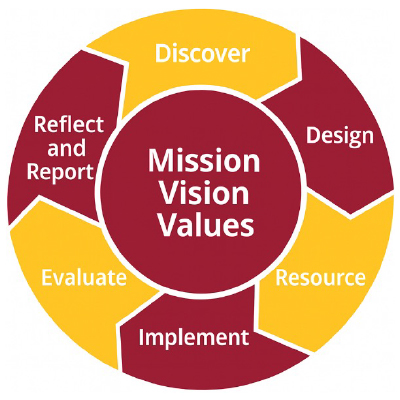
For the 2025-2028 Student Equity Plan, LMC has adopted a three-year cycle aligned with the Educational Strategic Plan:
Mission, Vision, and Values central to the core of the graphic surrounded with the process of Discover, Design, Resource, Implement, Evaluate, Reflect and Report.
|
Key strategies include, and more will be developed through the Discover/Design phase:
- Black Student Success Initiative and Learning Communities: Strengthen persistence and transfer-level English and math completion through mentoring, cohort supports, HBCU tours, and cultural programming. Expand partnerships with learning communities.
- Proactive Outreach and Early Planning: Use TargetX CRM, pre-semester counseling, and calling campaigns to increase comprehensive education plans. Expand dual enrollment, ESL, and first-gen outreach and create structured transfer pathways and workshops.
- Student Leadership, Ambassadors, Tutoring, and Research Opportunities: Build the BSSI Student Advisory Council and expand the Student Ambassador Program with leadership training. Reimagine tutoring and mentoring programs and increase research-based learning modeled after STEM programs.
- Professional Development: Continue equity-focused faculty and staff learning through the Pedagogy Innovation Project, conferences, and workshops emphasizing inclusive, data-informed teaching.
- Data- and Research-Informed Coordination: Align equity, planning, and resource allocation through the 3-year SEP cycle integrated with the Educational Strategic Plan and Program Review processes.
Resources and Oversight
The SEA Program allocation for 2025-26 is $3,477,681. SEA funding supports implementation and evaluation of all plan initiatives. The Office of Diversity, Equity, Inclusion, and Belonging (DEIB) coordinates the plan in partnership with the Institutional Development for Equity and Access (IDEA) Committee and the Office of Planning and Institutional Effectiveness (PIE).
Coordinated funding across SEA, Strong Workforce, Foundation, and categorical programs, including LMC’s AANHPI, Dreamers, and LGBTQ+ initiatives, ensures sustainability, efficiency, and impact.
Progress and Assessment (2022–2025)
During the previous plan cycle, LMC achieved measurable progress through Zero Textbook Cost (ZTC) expansion, Basic Needs and mental health supports, and data-informed professional learning. ZTC efforts led to a 13% increase in course success for African American students and 9.6% for Hispanic students. The College also strengthened its infrastructure for outreach, persistence, and transfer, laying the groundwork for this plan’s intensified focus on DI populations and system-level redesign. LMC has adopted institutional strategies to shift culture, align equity and operations, and embed intentional design:
- Cohort-Based, Identity-Centered Programs Anchored in Data and Identity: programs like the Brothers of Excellence, Legacy Scholars and Student Athlete Academy pilots, initiated through SEP 2022-25 are making an impact. The Black Student Success Initiative has also guided with a more integrated and impactful approach, showing promise in Black student success. Programming and transfer supports like the HBCU Spring Break Tour (running since 2012).
- Radical Redesign of Operational and Governance Structures Around Equity: SEA funds and mini-grants encourage cross-unit innovation, shifts in pedagogy, and equity experiments across the college. The 2022-25 plan allowed faculty, staff, and managers to pilot strategies that are now reaching broader campus. Additionally, the funding supports staffing in key Student Services areas.
- Culture Shift: Equity Mindset, Professional Development and Campus Culture - Pedagogy Innovation Project started in 2017 has become a key PD program; Visible affirmation and identity-based programming: Events like MLK celebrations, Black Graduate Receptions, and signature cultural events help affirm student identities and signal institutional commitment to racial equity and belonging.
Looking Ahead
The 2025-2028 SEP continues this trajectory by prioritizing sustainability, integration with college plans and processes, and accountability. By driving equity as the mechanism for institutional improvement, LMC ensures that as outcomes for disproportionately impacted students rise, overall success will increase as well, fulfilling LMC’s mission to empower every student achieve their academic and career goals in a diverse and inclusive learning environment.
To request a copy of the full plan or previous plans, please email equity@losmedanos.edu.
For more information contact:
- Rosa Armendàriz
- Acting Vice President Student Services and Senior Dean, Diversity, Equity, Inclusion & Belonging
- Room: SU-114
- (925) 473-7314
- rarmendariz@losmedanos.edu